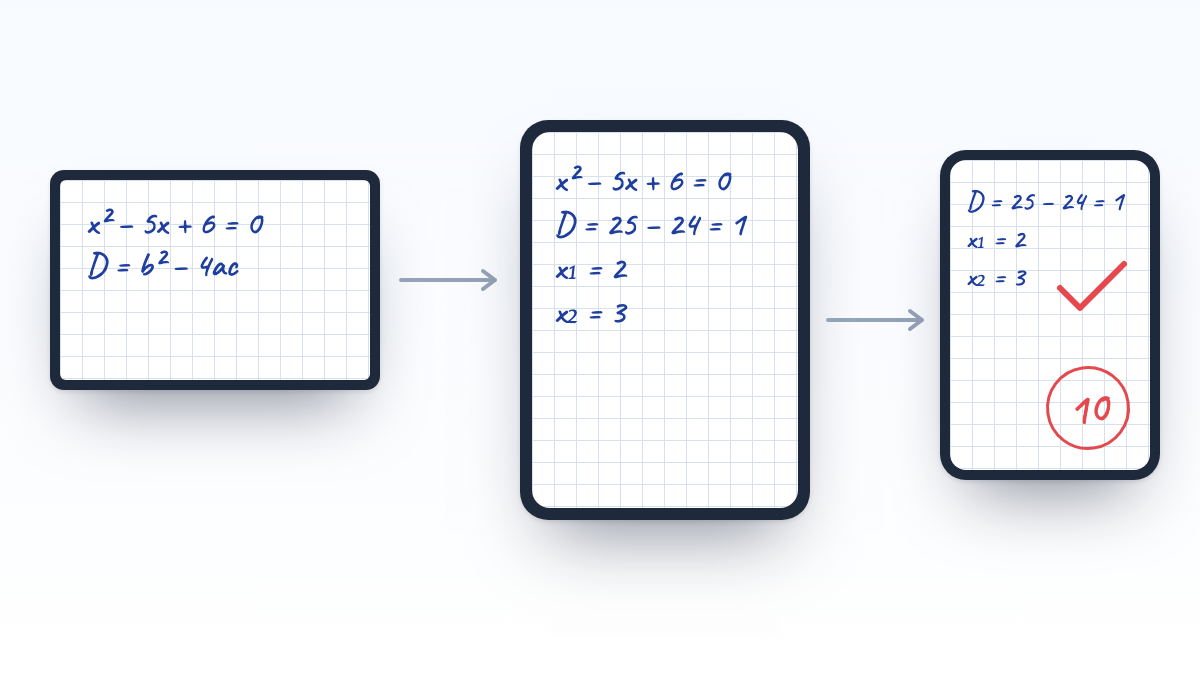
The teacher explains at the board, the student copies it into a notebook, solves the homework at home and brings the notebook to the next lesson. This cycle has not changed for years, yet something gets lost at every step: the board is wiped, the notebook stays at home, and checking takes hours in the evening. A digital notebook moves the same cycle onto a screen and loses none of the steps.
What a digital notebook is
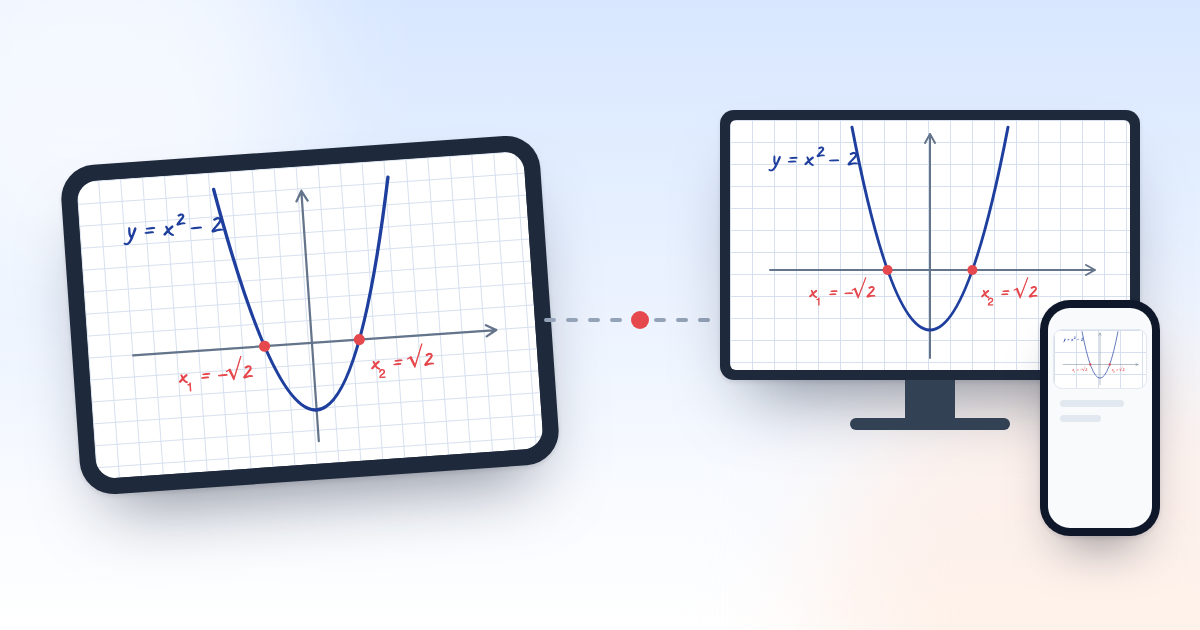
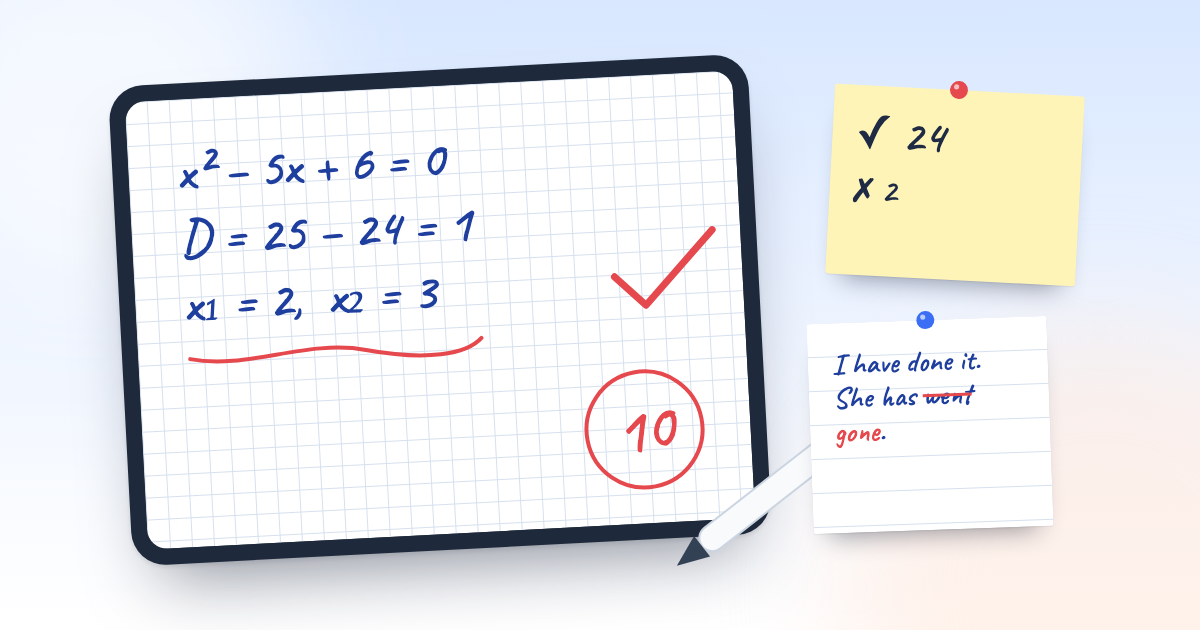
A digital notebook is a notebook the student opens on a tablet, phone or computer. It looks like a paper one: grid, lined or coordinate sheets and handwriting with a pen. The difference is that it is connected to the teacher’s panel. The teacher sends the assignment there, the student writes the solution right there, and the teacher corrects it on top of the student’s own writing.
An electronic notebook often means a gradebook: who came and which grade they got. A digital notebook is the work itself: solutions, drawings, essays and the teacher’s notes on them.
What gets lost in a paper notebook
- The explanation on the board is wiped when the lesson ends. If a student did not copy it in time, there is nothing to look at at home.
- The notebook stays at home or gets lost, and checking is delayed by a lesson.
- The teacher checks a pile of notebooks in the evening, and the student sees the grade only at the next lesson.
- Parents do not know what their child learned or which assignment was missed.
- A tutor has to explain the topic again to a student who could not come.
What a digital notebook gives students
- Every page of the lesson stays in the notebook: whatever was written on the board moves to the student’s notebook when the lesson ends.
- Homework can be done anywhere: on a tablet at home or on a phone on the way.